Sleep tips
Sleep Disorders and Insomnia: How Stress Affects Our Sleep
By Deluxe Sleep · Published on
Contents
Sleep Disorders and Insomnia: How Stress Affects Our Sleep
Switzerland is stressed. Day after day, many people in Switzerland have to juggle a hectic routine, countless appointments, family and work. In trying to meet all of these obligations, stress levels rise. When this happens frequently, many find themselves unable to switch off in the evening due to constant tension. BICO's first Swiss sleep study shows that 34% of the Swiss population suffers from tension at night and 20% from nervousness. These symptoms can lead not only to trouble falling asleep but also to sleep disorders and insomnia. Read on to find out which other factors are relevant and how you can reduce stress for better sleep.
Everyday stress leads to trouble falling asleep
What is stress?
In everyday language, stress is often equated with being overburdened. But stress is actually just the body's natural response to internal and external stimuli. In short bursts, healthy stress is meant to drive the body to peak performance. Recovery phases then help the body wind down again after periods of stress. Persistent stress, on the other hand, can make you ill and, among other things, weaken the immune system, since the brain and the autonomic nervous system become overstimulated by so-called stressors and there aren't enough restful phases in between. Typical stressors can be noise, work stress, a poor working environment and dissatisfaction. In your private life, relationship or family problems can lead to increased stress. Since early 2020, the pandemic and its consequences have also become a major stressor. Many people feel uncertain or anxious about the future. This constant tension also directly affects our hormonal system, since the adrenal glands release cortisol, which among other things prevents the release of the sleep hormone melatonin. As a result, we can't fall asleep in the first place and can't recover sufficiently. This in turn reduces our performance, increases concentration problems and sleep disorders, and leads to a weakened immune system.
And Switzerland? How stressed is it?
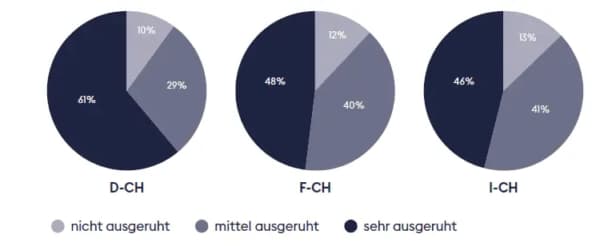
With so many stressors, it's no wonder that the share of stressed residents in Switzerland rises every year. According to BICO's first Swiss sleep study, a full 31% of the Swiss population feels stressed. This carries over into sleep at night as well. 19% of people in Switzerland say they don't feel rested in the morning, and 22% even feel completely worn out. Ticino, for example, ranks first at 13% when it comes to not being well rested. Those affected suffer from exhaustion and increased fatigue. Falling asleep and staying asleep in particular become a challenge as a result. 16% of people in Switzerland need a full 30 minutes to fall asleep. Some even experience completely sleepless nights. And anyone who doesn't sleep well is more susceptible to new stress. This creates a vicious cycle that is hard to break out of.
Can the right sleep surface counteract the resulting fatigue?
Long walks, cooking together, a good book, yoga or a warm shower: many people try to find calm and relaxation after a stressful day in all sorts of different ways. Those who have such relaxation rituals lower their stress levels considerably. This also noticeably improves perceived sleep quality. The right sleep surface can likewise have a direct effect on sleep quality. Studies show that even people with sleep disorders and pain find relief when their bodies are ergonomically supported at night. Elements such as materials, typology, mattress construction and firmness all play an important role. Our blog post "Prevent back pain – with the right mattress" shows you what matters when buying a mattress. A good example of this is the BodyLuxe relaxation mattress from BICO, which we carry at Deluxe Sleep. Its integrated topper precisely accommodates every body shape and gently molds itself to the person resting on it. The differentiated zoning supports the deep muscles so they can relax completely.
Tips: how you can reduce stress and sleep better
Take small breaks during the day. Work in particular is a major stressor for many people, which is why setting small boundaries is important. It becomes especially difficult when working from home offers no physical or mental separation between work and private life. That's why you should build small breaks into your day. These might be a lunchtime walk, your favorite music, or a nice cup of tea or afternoon snack.
Make sure you have the right sleep surface. The body can remain tense even at night. Help it let go by having a comfortable, ergonomic sleep surface tailored to your needs. If you'd like to learn more about the topic of firmness, you can read our blog post "How to find the right firmness for your mattress".
Relaxation exercises before bedtime are well worth it. After a long day, the muscles are often tense and the mind overworked, which is often why we feel stressed. To counteract this, you can do yoga, stretching or breathing exercises before going to bed. This can loosen up small and large muscle groups alike, regulate breathing and relieve the autonomic nervous system. This supports body and mind in winding down gently. Even a 15-minute session brings a noticeable boost in well-being.
Conclusion
Persistently elevated stress levels lead to nervousness and poorer sleep at night. Try to slow down your daily routine and plan deliberate breaks for relaxation. Above all, the time before falling asleep should belong entirely to you and be devoted to unwinding – in whatever way works for you. Combined with a suitable sleep surface, such as those we carry in our range, this makes for better sleep. You can find all the results of BICO's first Swiss sleep study here: Sleep Study.
Source: This article is based on an article from the BICO sleep blog (bico.ch). The research findings, product developments and test results mentioned in it come from BICO or from the third parties named in each case.