Sleep tips
Prevent Back Pain – with the Right Mattress
By Deluxe Sleep · Published on
Prevent Back Pain – with the Right Mattress
It pulls, stabs, or burns – many people in Switzerland suffer from back pain. A great many, in fact: around 80% of adults complain of occasional or recurring back trouble. The causes are varied. Pain in the back can arise from tension that is encouraged by lying incorrectly on an unsuitable mattress. That makes it all the more important that your mattress is matched to your back and relieves your muscles and spine.
How Sleep, Mattress, and Back Pain Are Connected
"Sleep" and "back" are more closely connected than you might assume at first glance: after all, we spend around 30% of our lives lying down. Poor lying posture can therefore have a negative effect on the musculoskeletal system and cause pain. Ergonomically correct lying, by contrast, allows the muscles and spine to be relieved and to regenerate. Back pain that shows up especially after waking is a particular sign that it could be improved or even avoided with an optimally matched bed system. Conversely, pain can impair the quality of your sleep. Over the longer term, this takes a toll on, among other things, our performance and ability to concentrate.
Elements of Back-Friendly Sleep
Your bed system should be built so that it actively counteracts tension. When the spine is optimally supported, the muscles can relax and recover from the strains of everyday life. For full regeneration, our musculoskeletal system needs relief and support in exactly the right places. The goal is the most even pressure distribution possible across the lying surface, which also ensures good blood circulation throughout the body. If the body lies in an unfavorable position, this can lead to tension and circulation problems. We also turn over more often to compensate for the poor posture, which disturbs our sleep. Whether you choose a conventional mattress with a slatted base or a box-spring bed – keep the following aspects in mind when choosing your bed system:
Sleeping Position
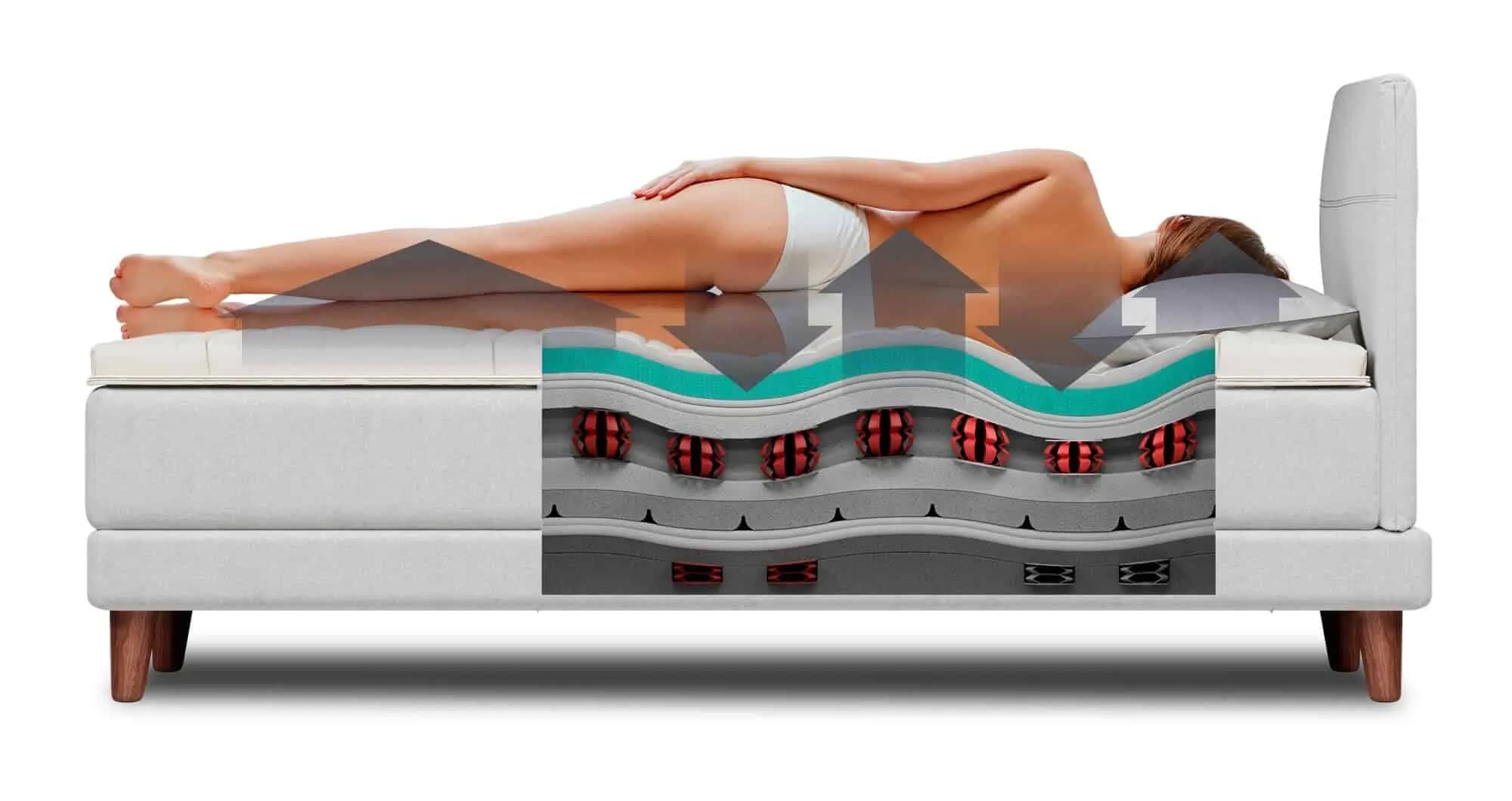
We all turn over up to 60 times a night in our sleep. So there is no such thing as one fixed sleeping position. Nevertheless, many people have a preferred position for falling asleep: some drift off most easily lying on their back, others on their side or stomach. But one thing applies to everyone: the spine should be straight while lying down, or rather in its naturally slight S-shape, so that as little pressure as possible builds up during sleep. Depending on lying position and body type, the body needs somewhat different support and relief. A suitable bed system should be tuned accordingly: back sleepers need particularly good support for the lumbar spine, side sleepers need good give in the shoulder and hip area along with good neck support. For stomach sleepers, it is especially important that the spine does not sag.
Mattress Firmness
Which mattress firmness should be chosen for back problems? This question cannot simply be answered in general terms – it depends on each person's individual physical characteristics. As a rule, lighter people tend to be recommended a softer mattress, while comparatively heavier people should sleep on a somewhat firmer one. Ultimately, though, it is the construction of the mattress, or of the entire bed system, that should be individually selected and adjusted.
Bed System
For back-friendly sleep, it pays to coordinate the mattress, the slatted base (or the elements of a box-spring bed), and the pillow with one another. A mattress with different lying zones adapts particularly well to the individual areas of the body. Ergonomic models in particular are recommended for back trouble. BICO VitaLuxe, for example, offers differentiated body support with 7 zones and, thanks to a point-elastic surface, ideal pressure relief. But every mattress has its limits. That is why a slatted base provides additional support. Elastic spring elements and slats cradle the body and, on many models, can be individually adjusted. A flexible shoulder zone can bring great relief for those with complaints. The right pillow also plays a major role, especially in the neck area. The head should be positioned neither too high nor too low, as the neck and shoulders will otherwise tense up. Recommended are ergonomic pillows that adjust to your sleeping position, letting the head sink in enough while still providing support – such as the BICO Vita or BICO Clima pillows.
Conclusion
The types and causes of back pain are varied, and persistent complaints should always be treated medically. Ergonomically favorable lying, however, can help prevent back pain or support its treatment. The right bed system for this should be individually matched to you, keep your spine straight, and allow your musculoskeletal system to relax. Also replace your mattress every 10 years, since by then its resilience is no longer sufficient. Best of all, get expert advice and be sure to try lying on it yourself. Only then can you judge what is good for your back.
Would you like a mattress or bed system perfectly matched to your back? Book a personal consultation appointment now at our showroom in Bischofszell – we will be happy to advise you and let you take your time trying it out.
Source: This article is based on a piece from the BICO sleep blog (bico.ch). The research findings, product developments, and test results mentioned in it come from BICO or from the respective third parties named.


